
Trigeminal Neuralgia (TN) is widely considered one of the most agonizing conditions known to medical science. Often referred to as "the suicide disease" due to the severity of the pain, it involves the trigeminal nerve—the primary nerve responsible for sensation in the face. For those suffering from TN, even the mildest stimulation, such as brushing teeth, a light breeze, or simply smiling, can trigger jolts of excruciating, electric-shock-like pain.
Standard Western treatments often rely on heavy anticonvulsant medications or invasive surgeries, both of which carry significant risks and side effects. However, an increasing number of patients are turning to Traditional Chinese Medicine (TCM), specifically Tui Na massage, as a powerful, non-invasive avenue for relief. Tui Na offers a holistic approach that seeks not just to numb the pain, but to address the underlying physiological and energetic imbalances causing it.
Understanding the Agony of Trigeminal Neuralgia
To understand how Tui Na helps, one must first understand the mechanism of the disorder. The trigeminal nerve (Cranial Nerve V) splits into three branches, affecting the forehead, cheek, and jaw. When this nerve is compressed—often by a blood vessel pressing against it at the base of the brain—or damaged by conditions like multiple sclerosis, the protective myelin sheath wears away. This causes the nerve to misfire, sending hyperactive pain signals to the brain.
While Western medicine views this primarily as a mechanical or chemical issue, Traditional Chinese Medicine views TN as a disruption of flow. In TCM, pain is defined simply: "Where there is stagnation, there is pain."

What Is Tui Na?
Tui Na is a therapeutic form of massage that has been a pillar of Chinese medicine for over 2,000 years. Unlike a standard relaxation massage, Tui Na is medical and rigorous. The name literally translates to "push" and "grasp," referring to the dynamic hand techniques used to manipulate the soft tissue and stimulate the body’s energy channels, or meridians.
Practitioners use a variety of techniques—including kneading, rolling, pressing, and rubbing—to remove blockages along the meridians, promoting the free flow of Qi (energy) and Blood.
The TCM Perspective: Why the Face Hurts
In the context of Chinese Medicine, Trigeminal Neuralgia is often categorized under "facial pain" caused by the invasion of external pathogens like "Wind-Cold" or "Wind-Heat," or internal imbalances such as "Liver Fire" rising. These factors lodge in the meridians of the face (primarily the Stomach and Large Intestine channels), causing obstruction.
When the flow of Qi is blocked in the face, the local area becomes malnourished and hypersensitive. Tui Na aims to expel this "Wind," clear the heat, and dredge the meridians to restore smooth circulation.
How Tui Na Alleviates TN Symptoms
Tui Na provides relief through several physiological and energetic mechanisms. It is rarely used as a standalone cure but acts as a profound management tool that can reduce the frequency and intensity of attacks.
1. Releasing Myofascial Constriction
While the root of TN is often at the nerve root, peripheral muscle tension exacerbates the condition. Tightness in the sternocleidomastoid (SCM) muscles of the neck, the trapezius, and the masseter (jaw) muscles can compress the nerve branches further.
A skilled Tui Na practitioner works to release these specific myofascial trigger points. By relaxing the deep musculature around the neck and jaw, the pressure on the trigeminal nerve branches is reduced, allowing for decreased neural excitability.
2. Boosting Circulation and Reducing Inflammation
Pain causes ischemia (lack of blood flow) in localized tissue, which in turn causes more pain—a vicious cycle. Tui Na techniques utilize rhythmic compression and friction to dilate blood vessels. This rush of fresh, oxygenated blood helps flush out inflammatory cytokines that may be irritating the nerve. Improved microcirculation aids in the repair of damaged tissue and calms the hypersensitive nerve endings.
3. Sedating the Nervous System
Living with chronic pain keeps the body in a constant state of "fight or flight" (sympathetic nervous system dominance). This high-stress state lowers the pain threshold, making TN attacks more likely.
Tui Na is incredibly effective at shifting the body into a parasympathetic state ("rest and digest"). Through slow, rhythmic, and grounding techniques, the massage lowers cortisol levels and boosts endorphins—the body’s natural painkillers. By calming the central nervous system, Tui Na helps break the anxiety-pain feedback loop that plagues many TN sufferers.
4. Acupressure for Pain Control
Tui Na integrates acupressure (applying pressure to acupuncture points without needles). For TN, practitioners focus on specific distal and local points known to clear facial obstructions.
Local Points: Taiyang (temples), Xiaguan (ST7), and Jiache (ST6) are often treated gently to move stagnation in the jaw and face.
Distal Points: Crucially, if the face is too sensitive to touch, Tui Na practitioners will work on "distal points"—points on the hands and feet that correspond to the face, such as Hegu (LI4). This allows the therapist to treat the pain without triggering a flare-up by touching the face directly.
What to Expect During a Session
Safety and comfort are paramount when treating Trigeminal Neuralgia. A session tailored for TN differs from a standard Tui Na treatment in intensity and focus.
Assessment: The practitioner will assess which branch of the nerve is affected and identify triggers (cold, heat, touch).
Distal Work First: Therapy often begins on the hands, arms, neck, and upper back. This prepares the channels and relaxes the body before approaching the sensitive facial area.
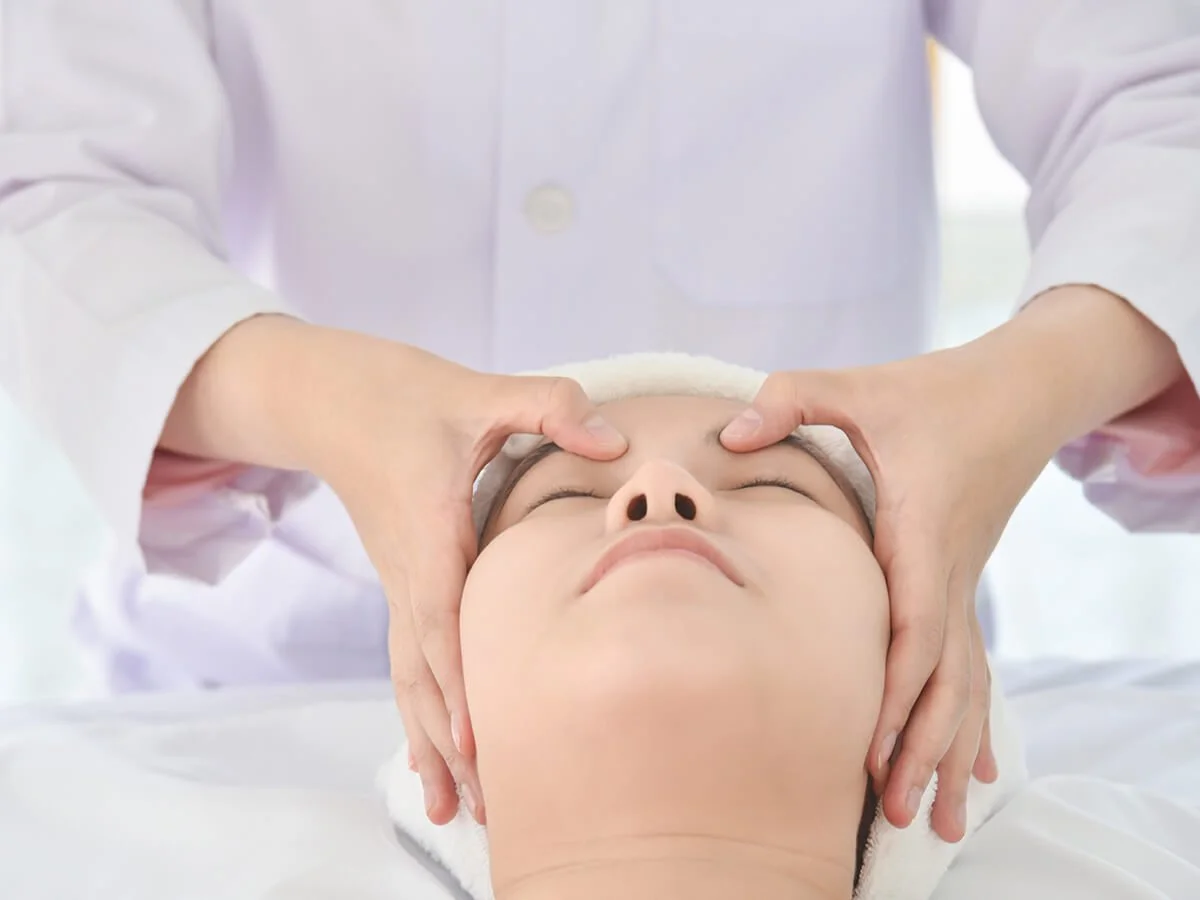
Gentle Facial Manipulation: When working on the face, the "pushing" and "wiping" techniques are performed with extreme care. The goal is to move Qi away from the painful obstruction, dispersing the stagnation.
Integrative Care: Tui Na works exceptionally well alongside acupuncture and herbal medicine. It can also be safely used in conjunction with Western medications, often helping patients manage their condition well enough to eventually lower their dosage under a doctor's supervision.
Find Relief and Reclaim Your Quality of Life
Trigeminal Neuralgia can feel isolating and hopeless, but it does not have to be a life sentence of unmanageable pain. Tui Na massage therapy offers a gentle, restorative path forward. By treating the whole body—releasing muscle tension, calming the mind, and unblocking the energy channels of the face—patients can experience significant relief.
The goal of Tui Na is not just to survive the pain, but to restore the body's natural balance so that life can be enjoyed once again.
If you are suffering from facial pain or Trigeminal Neuralgia, do not suffer in silence. Our specialists are trained in the specific TCM protocols required to safely manage and alleviate nerve pain.
Contact Tui Na Massage Therapy and Head Pain Clinic today to book your consultation at 416-532-9094.