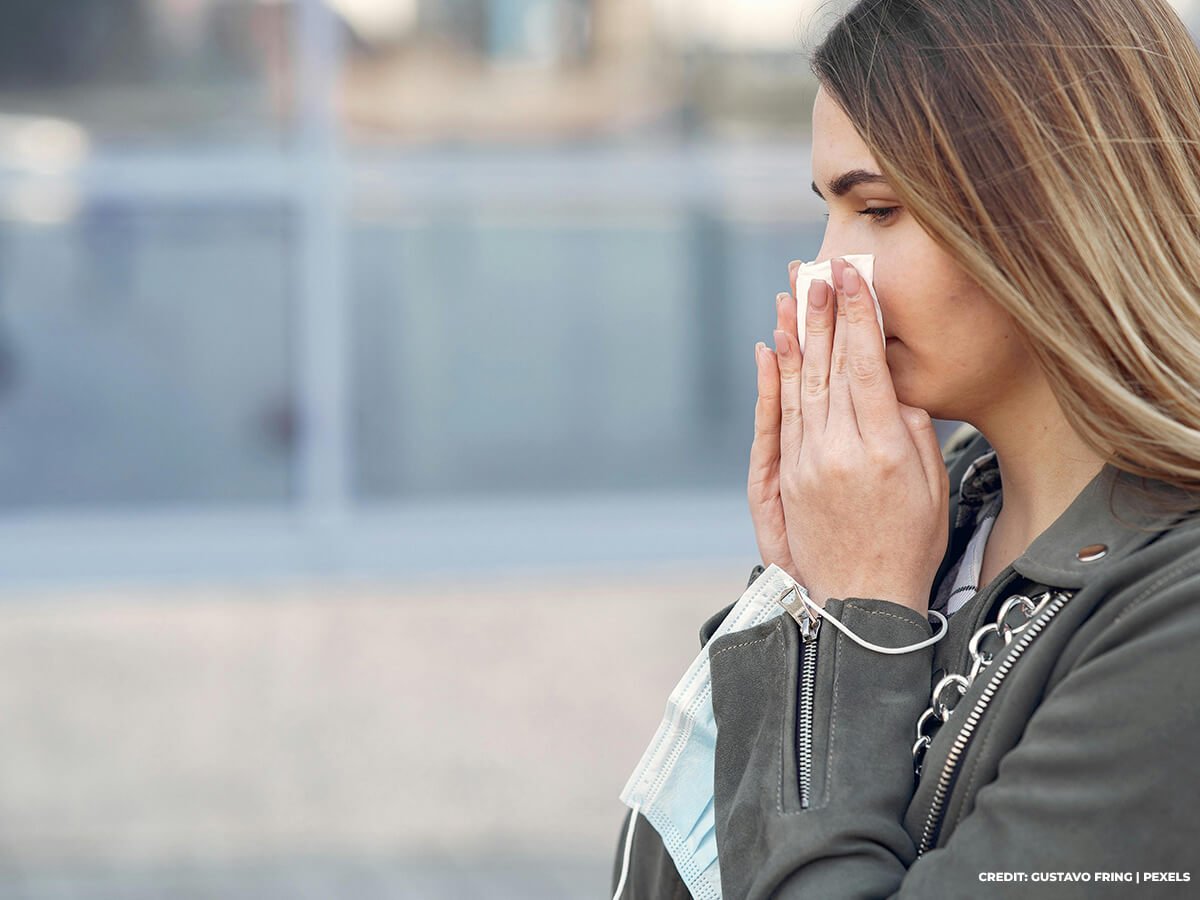
Autumn is a season of beautiful paradoxes. We welcome the crisp air and vibrant foliage, yet for millions, this change signals the start of fall allergy season.
While most associate hay fever with sneezing, itchy eyes, and a runny nose, a more insidious connection is often overlooked: the link between seasonal allergies and the onset or worsening of chronic pain.

This reaction, which begins in the sinuses, can trigger a cascade of systemic inflammation that settles into the body’s weakest areas, transforming a temporary allergic reaction into a season-long battle with muscle aches, joint pain, and debilitating headaches.
The good news is that this cycle can be prevented.
Traditional Chinese Medicine (TCM), particularly acupuncture, offers a powerful, time-tested strategy not only to manage acute allergy symptoms but to fundamentally stop the inflammatory response before it becomes a chronic pain problem. This article explores how fall allergies contribute to chronic pain and how acupuncture can be your best defence.
The Alarming Link: From Ragweed to Chronic Pain
To understand the solution, we must first understand the problem. How does pollen from ragweed and mould spores lead to a flare-up of your fibromyalgia or ignite a tension headache that lasts for weeks?
The answer is one word: inflammation.
When your body encounters an allergen, your immune system mistakenly identifies it as a threat. It launches a defence, releasing a flood of chemicals, most notably histamines. While histamines are effective at expelling the “invader”—causing your nose to run and your eyes to water—they are also highly inflammatory.
For someone with mild, short-lived allergies, this inflammation is localized and temporary. The body clears the histamines, and life returns to normal.
However, for those with moderate to severe allergies, this inflammatory response doesn’t just stay in the sinuses. It becomes a low-grade, systemic fire. This constant state of immune activation, known as chronic inflammation, is the primary driver behind most chronic pain conditions.
This systemic inflammation does several things:
Increases muscle tension. Inflammation is a state of “high alert.” Your nervous system shifts into a sympathetic (fight-or-flight) mode. This causes your muscles, particularly in the neck, shoulders, and back, to tighten reflexively. This constant tension leads to trigger points, or “knots,” which themselves refer pain to other areas, like the head (tension headaches) or down the arms.
Exacerbates joint pain. For individuals with arthritis or other joint issues, this systemic inflammation is like pouring fuel on a fire. The inflammatory compounds circulate through the bloodstream and settle in the joints, increasing swelling, stiffness, and pain.
Worsens central sensitization. In conditions like fibromyalgia, the central nervous system is already hypersensitive to pain signals. The constant inflammatory “noise” from allergies further lowers the pain threshold, making the body interpret even normal sensations as painful.
From a TCM perspective, this process is described as an invasion of “external pathogens” that overwhelm the body’s Wei Qi, or defensive energy, which is conceptually similar to the immune system.
When the Wei Qi is weak, these pathogens aren’t expelled. Instead, they lodge deeper into the body's channels, or meridians, causing “stagnation.”
In TCM, the rule is simple: Where there is stagnation, there is pain.

Acupuncture to Stop the Inflammatory Cascade
Unlike antihistamines, which merely block the symptoms of the histamine release, acupuncture aims to correct the root cause of the overreaction itself. It addresses both the acute allergy symptoms and the chronic pain they cause, often simultaneously.
Here’s how it works from both a Western and Eastern perspective.
The Western Scientific View
Acupuncture has been shown to have powerful, measurable effects on the body’s core functions:
It modulates the immune system. Studies show acupuncture can help calm an overactive immune system. It helps regulate the body’s response to allergens, reducing the amount of histamine and other inflammatory mediators released in the first place.
It releases natural painkillers. Inserting needles at specific acupoints stimulates the nervous system to release endorphins, the body’s natural pain-killing chemicals. This provides immediate relief from allergy-related headaches and muscle pain.
It calms the nervous system. Acupuncture is incredibly effective at shifting the body out of the “fight-or-flight” sympathetic state and into the “rest-and-digest” parasympathetic state. This tells your muscles to relax, slows your heart rate, and breaks the stress-tension-pain cycle.
It reduces systemic inflammation. Research indicates that acupuncture can reduce the body’s production of pro-inflammatory cytokines, the very compounds responsible for that systemic, “all-over” ache.
The Traditional Chinese Medicine View
A TCM practitioner using acupuncture is focused on re-establishing balance. The treatment will be customized to your specific pattern of imbalance, but it generally focuses on three goals:
Strengthening the Wei Qi. Using points like Stomach 36 (Zusanli), the practitioner builds up your defensive energy so your body is less susceptible to allergens in the first place. This is why acupuncture is most effective as a preventative medicine, starting before allergy season hits.
Expelling the pathogen. Points on the face, like Large Intestine 20 (Yingxiang) and Bladder 2 (Zanzhu), are used to open the sinus passages and clear the acute symptoms of “Wind” (sneezing, itching, pressure).
Restoring the flow of qi and blood. This is the most critical step for pain. Using key points like Large Intestine 4 (Hegu) and Liver 3 (Taichong), the practitioner breaks up the stagnation in the meridians. This “unblocks the dams,” allowing energy and blood to flow freely, nourishing the tissues and resolving pain.
A Holistic Plan: Complementary Therapies for Lasting Relief
Acupuncture is the cornerstone of the treatment, but it works best within a holistic plan. For pain that has already become embedded in the muscles and connective tissue, manual therapy is essential.
This is where therapies like Tui Na massage come in. Tui Na is not just a relaxation massage; it is a branch of Chinese medicine that uses specific hand techniques to manually move qi and blood in the meridians. For allergy sufferers, this is a game-changer for the neck, shoulder, and upper back tension that builds from coughing and sinus pressure.
A targeted session of our tui na therapy in Toronto can directly address the “stagnation” that acupuncture has begun to release, providing profound relief from stubborn stiffness.
For pain that is deeper and more chronic, a deep-tissue massage may be more appropriate. This technique focuses on releasing adhesions and trigger points in the deeper layers of muscle and fascia. When inflammation has caused tissues to “stick” together, deep-tissue work can manually separate them, restoring mobility and stopping patterns of referred pain.

Take Control of Your Health This Fall
You do not have to accept chronic pain as a side effect of fall allergies. The connection between the two is real, but it is also treatable.
By addressing the root cause—the imbalanced immune response and resulting chronic inflammation—acupuncture offers a path to genuine, lasting relief. It helps your body become more resilient, not just to pollen, but to pain and stress.
Don’t wait until the first sneeze. Be proactive this season. By exploring our pain treatments, you can create a customized plan that combines the immune-regulating power of acupuncture with the pain-relieving benefits of targeted manual therapy.
Ready to stop the cycle of allergies and pain?
Contact the Head Pain Clinic Toronto to discuss Tui Na Massage Therapy and comprehensive treatment options. Call 416-532-9094 or email info@totalwellnesscentre.ca to book your consultation today.